Guides · New Port Richey, Florida
New Port Richey History: Reading the Buildings of a Boomtown
The town that incorporated in 1924 with a donated park and a movie star’s name on a theatre now reads less like a destination and more like a footnote—but the buildings still tell the story of how fast ambition can be built, and how quietly it can settle.
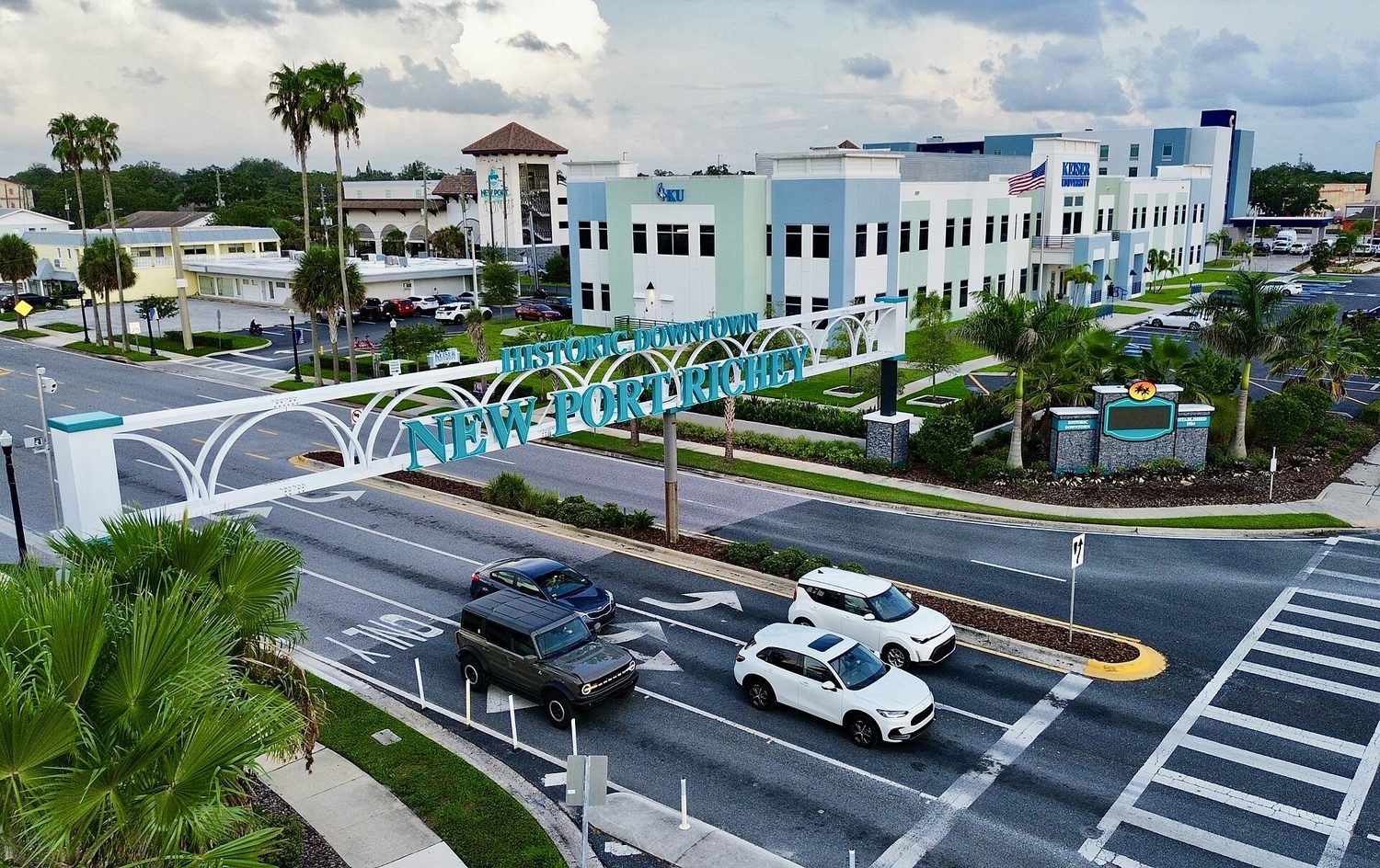
The Two Richeys
New Port Richey is the younger, upriver twin of Port Richey, which had already taken its name from the settler Aaron M. Richey. That distinction matters: the younger town was not a gradual settlement but a deliberate proposition. Incorporated on 24 October 1924, it had a city council that moved quickly—on 2 December of that same year, its first act was to accept a park donated by George Sims. That park, Sims Park, still carries his name, and it is the rare civic space that predates the town’s own bureaucracy. The speed of that acceptance suggests a place eager to look established, even before it was.
A Theatre Named for a Silent Star
The ambition was not subtle. For a few years, New Port Richey meant to be a Hollywood colony. The silent-film star Thomas Meighan built a house on the river in 1928 and wintered here. That is the whole of the verified record: a house, a year, a season. No claim of parties, no guest lists, no anecdotes about who swam off his dock. But the fact that a theatre named for him opened in 1926—two years before his house was built—tells you the town was courting him before he arrived. The Meighan Theatre was named for the actor, and that naming was the point. It was a billboard of aspiration, a way of saying that this river town was not just another citrus stop.
The theatre opened in 1926, during the boom. The house came in 1928, near the end of it. The order of those dates matters: the town built the monument before the man was secured. That is not a criticism. It is the charm. The ambition was the architecture.
What the Boom Left
The boom collapsed, and the ambition ended. Not the town—it kept its name, its park, its theatre. But the Hollywood colony never materialised into a permanent industry. The house on the river still stands, presumably, though the verified facts do not say what it is today. The theatre still carries the name, though the verified facts do not say what plays there now. What is verifiable is the residue: a town that rode the 1920s Florida land boom hard, and then had to learn to be a place rather than a pitch.
The census figures from the present day show the shape of that settlement. The population is 17,057 people, with a median age of 53.5 years. That is a town that has aged into itself. Of 9,423 total housing units, 718 are held for seasonal or recreational use—about 7.6 percent. That is not a resort town; that is a place where some people keep a second home, but most people live full-time. Vacant housing units number 1,367, which is more than the seasonal units, suggesting a market that has not fully recovered its boom-era confidence.
The economics are modest: median household income is $46,160, median home value is $164,600, and median gross rent is $1,154. The unemployment rate is 2.8 percent, which is low, and 15.7 percent of residents hold a bachelor’s degree or higher, which is not high. This is not a town of wealth or of poverty. It is a town of working people, many of them older, living in a place that once thought it would be famous.
Reading the Present
What does the town look like now, from the outside? The verified facts do not describe facades, storefronts, or river views. But the numbers sketch a portrait. A median age of 53.5 years suggests a place that attracts retirees and keeps its own. The seasonal units—718 of them—are not a flood; they are a trickle. The vacant units, 1,367, are more than the seasonal ones, which means the town has more empty homes than second homes. That is not a boomtown. That is a place that overbuilt once and has been absorbing the surplus ever since.
The theatre and the park are the two anchors that survived. The park was accepted on 2 December 1924, a civic act that cost nothing but goodwill. The theatre opened in 1926, a private act that cost real money. Both are named for men—Sims, Meighan—and both names have outlived the boom that produced them. That is the quiet triumph: the town did not become Hollywood, but it kept the names.
The Honest Reading
New Port Richey is not a cautionary tale. It is a story of a place that aimed high, missed, and then made a life anyway. The theatre is still named for Meighan. The park is still named for Sims. The town is still here, with 17,057 people, most of them not famous, most of them not wealthy, and many of them old enough to remember when the riverfront was supposed to be something else.
The boom’s collapse ended the ambition, but it did not end the town. It just changed the scale. A Hollywood colony became a place where 718 homes are held for seasonal use, where the median home value is $164,600, and where the unemployment rate is low enough that people are working, even if they are not starring.
That is the reading. The buildings say it plainly: we wanted to be a destination, and we became a home. Both are true, and the second is not a failure.
Common questions
- Why is New Port Richey called that?
- It's the younger, upriver twin of Port Richey, which was named for settler Aaron M. Richey. The town incorporated on 24 October 1924, and the name stuck to distinguish it from the older settlement downstream.
- What's the story with the Hollywood connection?
- In the 1920s, New Port Richey aimed to be a Hollywood colony. Silent-film star Thomas Meighan built a house on the river in 1928 and wintered here. The Meighan Theatre, named for him, opened in 1926. The land boom's collapse ended that ambition.
- Is the Meighan Theatre still there?
- The Meighan Theatre opened in 1926, named for silent-film actor Thomas Meighan. It's a key piece of the town's history, though the article doesn't specify its current status or operating hours. Check locally for today's use.
- Where is Sims Park and who was Sims?
- Sims Park is named for George Sims, who donated it. The city council accepted it on 2 December 1924, its first act after incorporation. It's a riverside park, central to the town's public space.
- What's the population and vibe of New Port Richey?
- Population is 17,057 with a median age of 53.5 years. Median household income is $46,160, and 15.7% hold a bachelor's degree or higher. It's a quieter, older community, with 718 homes used seasonally out of 9,423 total housing units.
- Is New Port Richey a good place to live or visit?
- Median home value is $164,600, and median gross rent is $1,154. Unemployment is low at 2.8%. It's a modest, historic river town—worth a visit for its 1920s buildings and Sims Park, not for flashy attractions.
Every business named above is one we hold a listing for, and every date traces to a source on our sources page. We do not describe menus, interiors or service we have not verified. Details change — confirm before you travel.