Guides · New Port Richey, Florida
The History of New Port Richey in 6 Landmarks
New Port Richey was supposed to be a movie star’s playground, and for a handful of years, it nearly was.
The River and the Richeys
Every Florida town needs an origin story, and this one has a twin. The older settlement, Port Richey, took its name from Aaron M. Richey, a settler who arrived before the boom. New Port Richey grew upriver from him, younger and louder. The two towns share a name, but not a temperament.
Port Richey was the quiet one. New Port Richey was the one with ambitions.
The Incorporation, 1924
On 24 October 1924, New Port Richey officially became a town. It was a small act of paperwork, but it signalled intent. The town wanted to be something. It wanted to be noticed.
The first council meeting came just over a month later, on 2 December. Their first act was not a budget or a zoning ordinance. It was to accept a gift. George Sims had donated a park, and the council took it. That park still anchors the town today.
Think about that. The very first thing the new government did was say yes to a public space. Not a road, not a tax. A park.
Sims Park
The park is named for its donor, George Sims, and it sits on the river. It is the kind of place that makes a town feel older than it is, with live oaks and a view of the water. The council accepted it on 2 December 1924, and the name stuck.
The park was the first landmark, but it was not the flashiest. The flash came next.
The Hollywood Dream
For a few years in the mid-1920s, New Port Richey believed it could be a Hollywood colony. This was not a modest hope. The town courted wealthy residents and film people, and it worked, briefly.
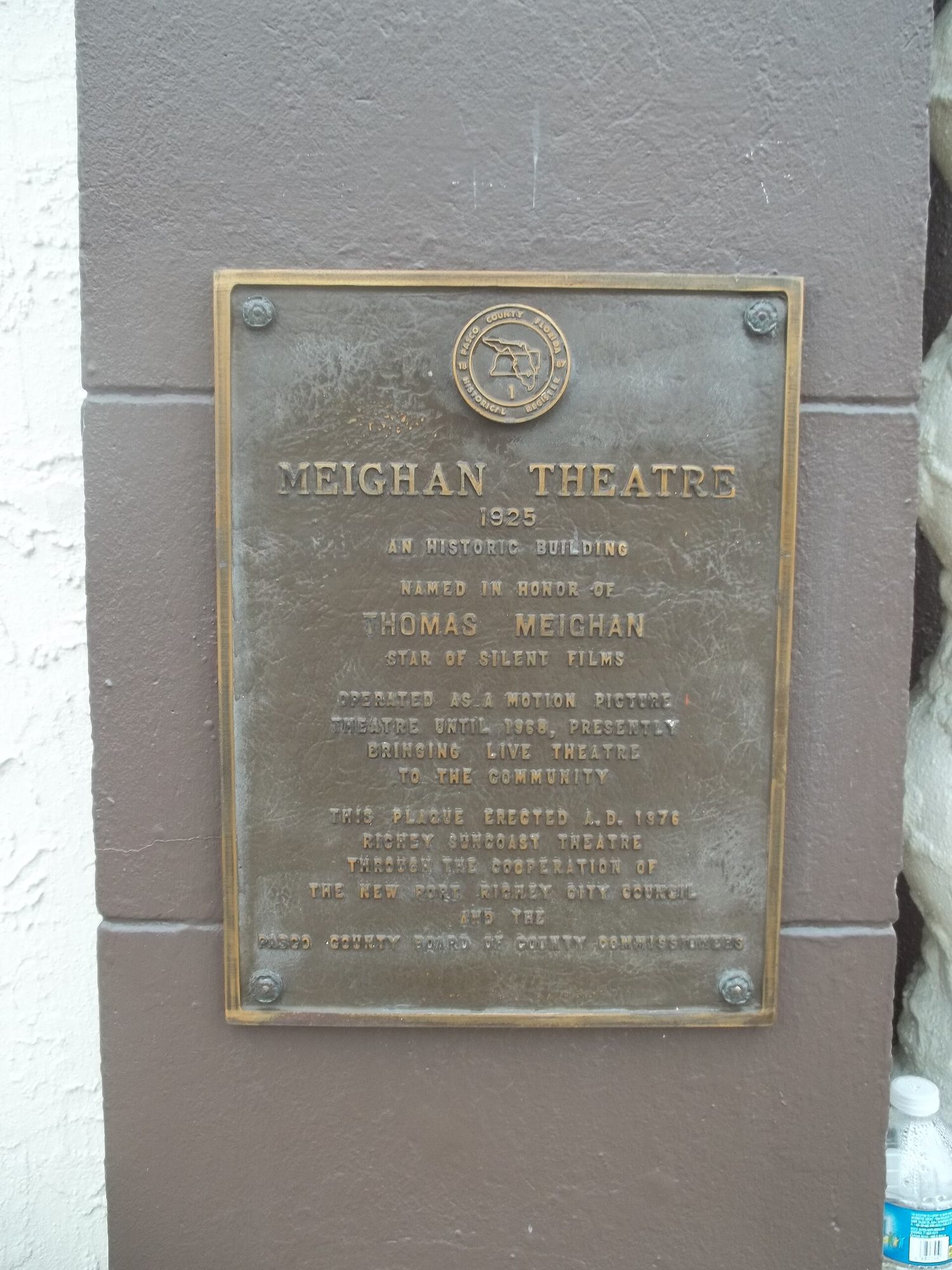
The silent-film star Thomas Meighan built a house on the river in 1928. He wintered here, which was the point. The wealthy came south to escape the cold, and New Port Richey wanted to be their destination. Meighan was the proof of concept.
A theatre named for him opened in 1926, two years before his house was built. The town was so confident in its future that it named a building for a star before he even had a home there. That is ambition. That is also a little reckless.
The Theatre
The theatre opened in 1926 with Meighan’s name above the door. It was a statement. New Port Richey was not just a river town; it was a town with a marquee. The silent-film star lent his name, and the town lent him its future.
For a moment, it worked. The theatre was a gathering place, a sign that the town had arrived. The movies played, the winter residents came, and the dream seemed real.
The Bust
Then the Florida land boom collapsed. It did not fade; it broke. The speculation that had built the town’s hopes also destroyed them. The wealthy visitors stopped coming. The film people moved on. The theatre stayed, but the dream did not.
New Port Richey did not become Hollywood. It became a small Florida town with a very good story.
The Town Today
The census numbers tell a quieter version of the story. The population is 17,057 people, and the median age is 53.5 years. This is not a boomtown anymore. It is a place where people settle down.
The housing stock reflects the pause. Of 9,423 total housing units, 718 are held for seasonal or recreational use. That is the ghost of the winter colony, still present but smaller. Another 1,367 units sit vacant. The boom built more than the bust could fill.
The economics are modest. The median household income is $46,160, and the median home value is $164,600. The median gross rent is $1,154. Only 15.7 percent of residents hold a bachelor’s degree or higher. The unemployment rate is 2.8 percent, which is healthy.
These are not Hollywood numbers. They are real-town numbers.
What Remains
The landmarks are still here. The park that George Sims donated is still a park. The theatre still carries the name of the star who wintered here. The house on the river still stands, even if the man who built it is long gone.
The ambition is the charm. New Port Richey wanted to be a movie colony, and it failed. But it failed in a way that left behind a park, a theatre, and a story. That is more than most boomtowns got.
The town is not a paradise, and it never was. It is a place that reached for something grand and came back with something real. The river is still there. The park is still there. The name of a silent-film star is still on a building.
That is enough.
Every business named above is one we hold a listing for, and every date traces to a source on our sources page. We do not describe menus, interiors or service we have not verified. Details change — confirm before you travel.